OnePlus Nord CE5 5G vs Xiaomi Poco M8 Pro
Shop Android Smartphones
OnePlus Nord CE5 5G
Starting at
£430.00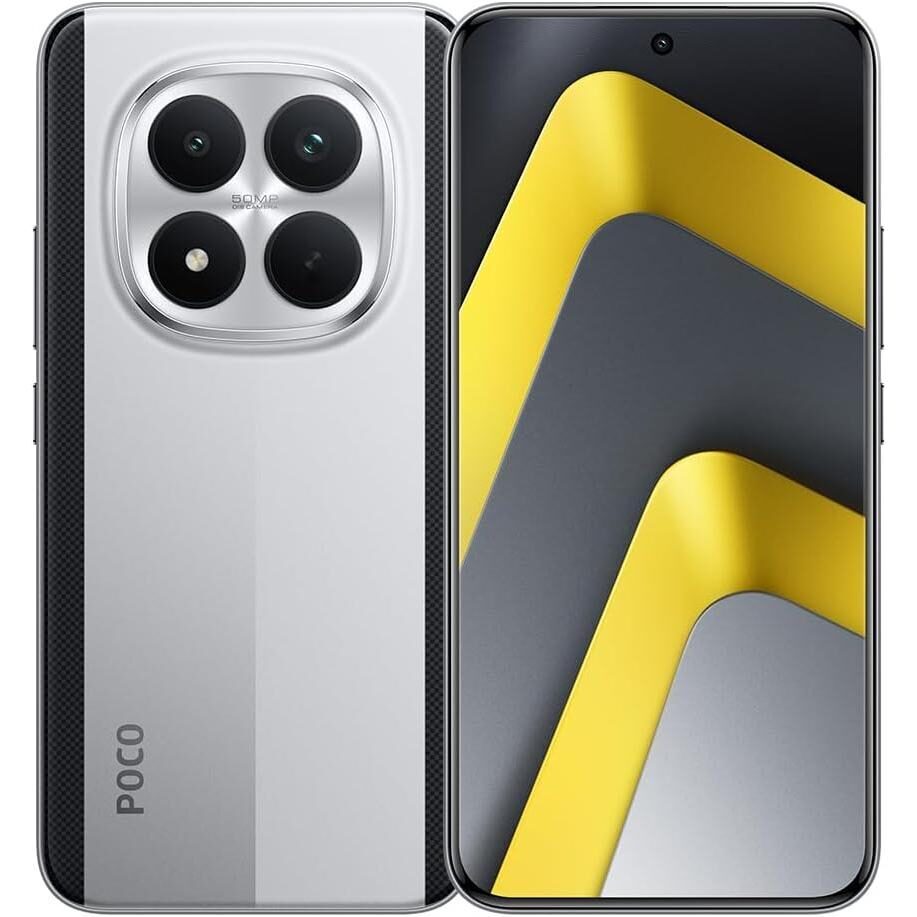
Xiaomi Poco M8 Pro
Starting at
£420.00What's the difference between the OnePlus Nord CE5 5G and Xiaomi Poco M8 Pro?
OnePlus Nord CE5 5G vs Xiaomi Poco M8 Pro comes down to the chipset, battery and screen size. Refurbished, the Xiaomi Poco M8 Pro starts at £420, £10 less than the OnePlus Nord CE5 5G. The Xiaomi Poco M8 Pro is the newer model, released in 2026.
Refurbished from
Chipset
Battery
Screen size
Screen type
Front camera
- Chipset: Mediatek Dimensity 8350 Apex on the OnePlus Nord CE5 5G, Qualcomm SM7635-AC Snapdragon 7s Gen 4 (4 nm) on the Xiaomi Poco M8 Pro.
- The Xiaomi Poco M8 Pro has a bigger battery: 6500 mAh vs 5200 mAh.
- Screen size: 6.77 inch on the OnePlus Nord CE5 5G, 6.83 inch on the Xiaomi Poco M8 Pro.
OnePlus Nord CE5 5G vs Xiaomi Poco M8 Pro specs
The Nord CE5 5G and Xiaomi Poco M8 Pro both run Android and support 5G, but they differ in battery size, screen, cameras and storage options. The Xiaomi Poco M8 Pro offers a larger battery and a slightly bigger, higher resolution AMOLED screen, which suits users who want longer use between charges and a more spacious display for media. The Nord CE5 5G has a Fluid AMOLED screen and a dual rear camera setup, making it a good choice for those who prefer multiple rear lenses and a different screen technology. Storage options vary widely, with the Poco M8 Pro available in larger capacities, ideal for users needing more space. Both devices have 8 GB RAM for smooth everyday use.
OnePlus Nord CE5 5G vs Xiaomi Poco M8 Pro price
Colour
- WhiteSold out
- SilverSold out
- GreenSold out
Storage
- 128GBSold out
- 256GBSold out
- 512GBSold out
OnePlus Nord CE5 5G vs Xiaomi Poco M8 Pro battery life and software updates
Battery capacity and operating system affect how long the devices last in daily use and what software experience you get. Both support 5G for fast mobile networks.
Battery Capacity
The Nord CE5 5G has a 5200 mAh battery, suitable for long usage throughout the day. The Xiaomi Poco M8 Pro comes with a larger 6500 mAh battery, which is better suited for users who want extended battery life between charges, especially if you rely on your phone heavily for media or gaming.
Operating System
Both devices run Android, providing access to the same app ecosystem and familiar user experience. This means you can expect similar software capabilities and app compatibility on either device.
Battery
Fast charging
Foldable
Year of release
OnePlus Nord CE5 5G vs Xiaomi Poco M8 Pro performance
Performance depends on the chipset, memory and storage options you choose. Both phones come with 8 GB RAM to keep apps running smoothly, but the chipsets and storage capacities offer different strengths.
Chipset Differences
The Nord CE5 5G uses the Mediatek Dimensity 8350 Apex chipset, which handles everyday tasks well. The Xiaomi Poco M8 Pro is powered by the Qualcomm SM7635-AC Snapdragon 7s Gen 4 built on a 4 nm process, which might appeal if you prioritise a chipset built on a smaller manufacturing process.
Storage Options
Nord CE5 5G is stocked with 128GB of storage, suitable for everyday use and moderate file storage. Xiaomi Poco M8 Pro offers larger storage options of 256GB and 512GB, making it a better fit if you store lots of apps, photos or media files.
RAM Capacity
Both devices have 8 GB of RAM, which helps keep multiple apps open and running smoothly, supporting everyday multitasking without interruptions.
Chipset
RAM
OnePlus Nord CE5 5G vs Xiaomi Poco M8 Pro screen
Screen size, resolution and type influence your viewing experience. These differences affect how you enjoy videos, games and reading on each device.
Screen Size and Resolution
The Nord CE5 5G features a 6.77 inch display with a resolution of 1080 by 2392 pixels. The Xiaomi Poco M8 Pro has a slightly larger 6.83 inch screen and a higher resolution of 1280 by 2772 pixels. The Poco M8 Pro's screen offers more room for content and sharper detail, which benefits users who watch a lot of video or want extra screen space.
Screen Type
Nord CE5 5G uses a Fluid AMOLED display, which is known for smooth motion and vibrant colours. Xiaomi Poco M8 Pro has an AMOLED screen, providing rich colours and good contrast. Both screens deliver quality visuals, but the Fluid AMOLED may offer a slightly different feel in motion smoothness.
Refresh rate
Resolution
Screen size
Screen type
OnePlus Nord CE5 5G vs Xiaomi Poco M8 Pro camera
Camera setups and front camera resolution affect photo and video quality, as well as video calls and selfies.
Rear Camera Configuration
Nord CE5 5G has a double rear camera setup with two lenses, allowing for more photographic versatility. Xiaomi Poco M8 Pro has a single rear camera, focusing on one main lens. If you value having multiple rear cameras for different types of shots, the Nord CE5 5G suits that preference.
Main Camera Resolution
Both devices feature a 50 megapixel main camera, which captures detailed images suitable for everyday photography needs.
Front Camera Resolution
The Nord CE5 5G offers a 16 megapixel front camera, while the Xiaomi Poco M8 Pro doubles that with a 32 megapixel front camera. The higher front camera resolution on the Poco M8 Pro is ideal for those who prioritise sharper selfies and clearer video calls.
Camera type
Front camera
Main camera
OnePlus Nord CE5 5G vs Xiaomi Poco M8 Pro size and design
Other practical differences include size, weight, connectors and SIM options, which influence everyday handling and connectivity.
Physical Dimensions and Weight
The Nord CE5 5G measures 163.6 mm in height, 76 mm in width and 8.2 mm in depth, weighing 199 g. The Xiaomi Poco M8 Pro is slightly shorter at 163.3 mm, wider at 78.3 mm and a bit thicker at 8.3 mm, with a weight of 206 g. If you prefer a narrower and lighter phone, the Nord CE5 5G fits that preference, while the Poco M8 Pro offers a larger footprint.
SIM Card and Carrier Compatibility
Both devices support dual physical SIM cards and are unlocked, offering flexibility for use with multiple carriers and easy switching between networks.
Carrier compatibility
Connector
Depth
Height
Mobile network
SD card slot
SIM card
Weight
Width
OnePlus Nord CE5 5G or Xiaomi Poco M8 Pro: which should you buy?
Buy the OnePlus Nord CE5 5G if
- you want a lighter build (199 g vs 206 g)
Buy the Xiaomi Poco M8 Pro if
- you want to spend less: it starts at £420, £10 less than the OnePlus Nord CE5 5G
- you want a bigger battery (6500 mAh vs 5200 mAh)
- you want a higher-resolution front camera (32 megapixels vs 16 megapixels)
OnePlus Nord CE5 5G vs Xiaomi Poco M8 Pro FAQs
OnePlus Nord CE5 5G vs Xiaomi Poco M8 Pro comes down to the chipset, battery and screen size. Chipset: Mediatek Dimensity 8350 Apex on the OnePlus Nord CE5 5G, Qualcomm SM7635-AC Snapdragon 7s Gen 4 (4 nm) on the Xiaomi Poco M8 Pro. The Xiaomi Poco M8 Pro has a bigger battery: 6500 mAh vs 5200 mAh.
The Xiaomi Poco M8 Pro is cheaper refurbished, from £420 compared with £430 for the OnePlus Nord CE5 5G.
The Xiaomi Poco M8 Pro has a bigger battery: 6500 mAh vs 5200 mAh.
Both have the same main camera: 50 megapixels.
Refurbished, the OnePlus Nord CE5 5G comes in 128GB, and the Xiaomi Poco M8 Pro in 256GB and 512GB.